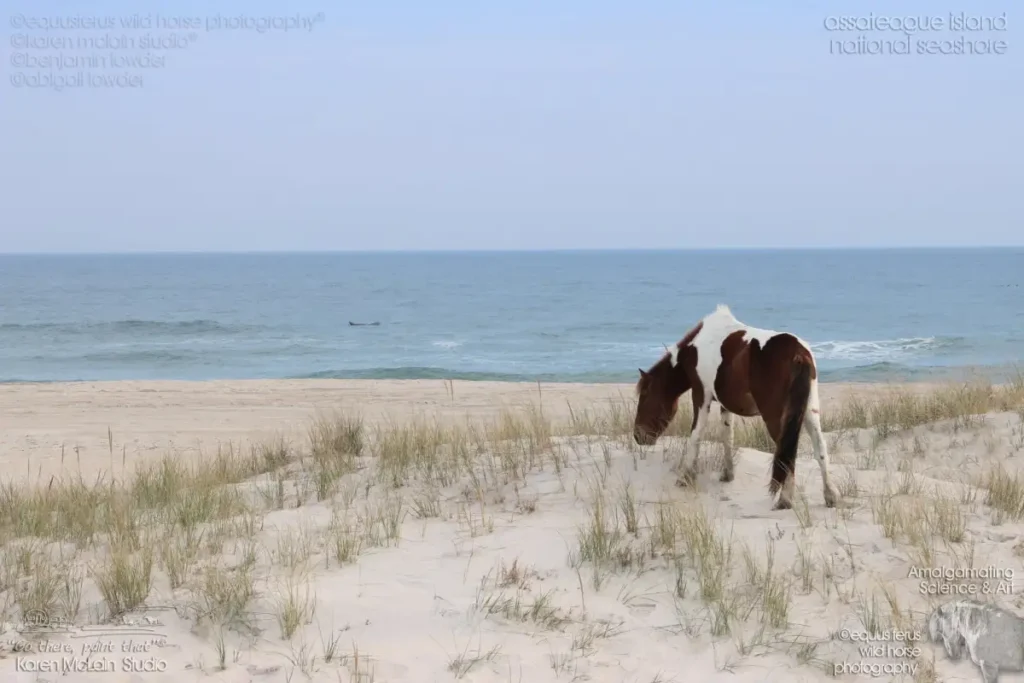
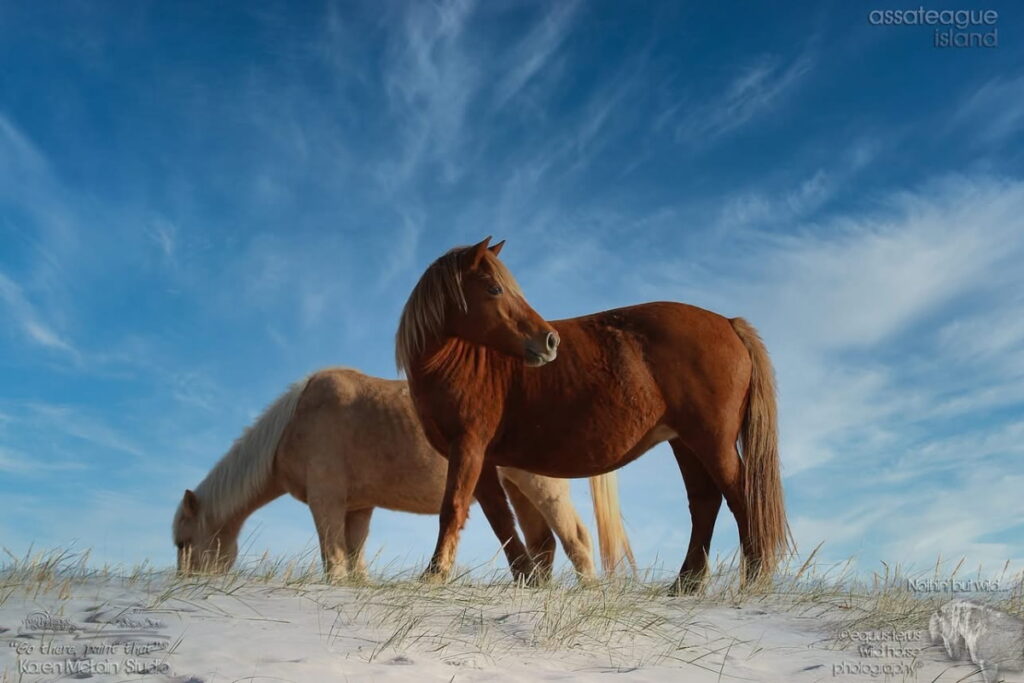
Education

UNDERSTANDING THE ISSUES

Protecting Assateague’s wild horses begins with understanding the environment they share with people.

Roadways, vehicles, campsites, food, visitor behavior, seasonal traffic, enforcement, and the horses’ own movement patterns can all affect safety. Assateague Horse Safety works to better understand those factors through research, documentation, public records, community observations, and expert input.

Just as important, we distinguish between what is documented, what has been observed or reported, and what still needs to be answered.

HORSES & ROADWAYS

Assateague’s horses may walk beside roads, cross travel lanes, or remain near areas of active vehicle traffic.

Drivers should obey posted speed limits and slow further when horses, traffic, visibility, or roadway conditions require it. When one horse crosses, others may follow, so drivers should remain alert rather than immediately accelerating after the first horse passes.

AHS is examining recurring roadway exposure, collision history, traffic patterns, available speed information, visibility, roadway conditions, and other factors that may help identify where additional safety measures should be studied.

Recurring observations can help identify where to look more closely, but they do not automatically explain why a collision occurred. Understanding roadway risk requires looking at horse movement alongside traffic data, collision records, environmental conditions, human behavior, and other available evidence.

KEEPING WILD HORSES WILD

Assateague’s horses are part of the island’s wildlife ecosystem. Wildlife generally refers to undomesticated animals living independently in their natural environment rather than under direct human care or control. Although the horses may be accustomed to seeing people, vehicles, campsites, and other human activity, they remain wild animals.

When wild animals are repeatedly exposed to people or other human activity without perceiving a threat, habituation can occur. Habituation is a learned decrease in an animal’s response to a repeated stimulus. In practical terms, a horse that repeatedly encounters people, vehicles, campsites, or developed areas may gradually become less likely to avoid them.

Food introduces an additional concern. When an animal begins associating people, vehicles, campsites, coolers, or other human activity with access to food, it can become food-conditioned. Feeding does not have to be intentional for this to happen; unsecured food, trash, coolers, or other accessible items can reinforce that association.

Repeated exposure to people, vehicles, food, campsites, and developed areas can therefore change how horses respond to their environment. Feeding, touching, approaching, crowding, or enticing horses can further reinforce those interactions and increase risk for both horses and visitors.

Habituation does not mean a horse has become tame or domesticated. A habituated horse is still a wild animal — one that may simply show less avoidance of people or human activity.

The safest interaction is one that leaves a wild horse’s behavior unchanged.

EVIDENCE MATTERS

A photograph, social-media post, eyewitness account, professional opinion, and official record are not the same kind of evidence.

AHS reviews information based on its source, documentation, context, and whether it can be independently supported. We distinguish among observations, photo-supported reports, corroborated information, official records, professional or expert opinion, and unresolved claims before drawing conclusions.

Patterns matter, but patterns alone do not prove cause. A photograph may document a horse standing in or beside a roadway, for example, but it cannot necessarily tell us how fast a vehicle was traveling, what happened before or after the image was taken, whether enforcement occurred, or why a particular incident happened.

That distinction is central to AHS research and education.

Our goal is to provide reliable, sourced information while clearly separating verified facts, documented observations, opinions, and unanswered questions.

WHAT AHS IS STUDYING

AHS is building an evidence base around horse and roadway safety on the Maryland side of Assateague.

Current areas of research include:

  • Horse-roadway exposure and recurring crossing areas
  • Horse-vehicle collision history
  • Traffic volume and vehicle-use patterns
  • Posted speeds and available speed data
  • Patrol coverage, warnings, citations, and enforcement practices
  • Visitor behavior and horse habituation
  • OSV and seasonal vehicle-use patterns
  • Incident response and post-collision procedures
  • Official herd information and population claims
  • Roadway visibility, environmental conditions, and other factors affecting safety

Some of these questions can be answered through existing records. Others still require additional data, public records, expert input, or further observation.

AHS is specifically seeking information about traffic counts, speed data, patrol and enforcement practices, horse-roadway observations, incident-response procedures, and other areas where important evidence gaps remain.

When we do not know something yet, we say so.

RESPONSIBLE OBSERVATION

Community observations can play an important role in identifying recurring roadway exposure, crossing areas, seasonal patterns, and other potential safety concerns.

But collecting information should never create additional risk for the horses.

AHS does not support approaching, following, feeding, enticing, herding, repositioning, or crowding a horse in order to obtain a photograph or report. We also do not support publishing precise, real-time horse locations in a way that could encourage people to converge on an animal.

A sighting is an observation, not automatically a verified fact. Photographs, corroborating reports, experienced observers, and additional records can help establish the reliability and context of an observation.

Good information matters. So does the way we collect it.

EDUCATIONAL RESOURCES

AHS shares additional research, expert perspectives, and educational material that can help visitors better understand horse behavior, roadway safety, management practices, and other issues affecting Assateague’s wild horses.

  • Horse-Vehicle Collisions on Assateague: A Data-Driven Approach
  • Equus Ferus Wild Horse Photography

This resource explores horse-vehicle collisions on Assateague and the use of observation and data to better understand when, where, and under what conditions horses and vehicles interact.

WANT TO LEARN MORE OR HELP?

AHS is continuing to research the issues affecting horse and roadway safety at Assateague. Community members, subject-matter experts, researchers, and people willing to contribute their skills or experience can all play a role.

Preventing Horse-Vehicle Interactions on Assateague
Preliminary Data Is In